CASE STUDY / SALES OPERATIONS
All case studiesFrom Activity-Based Lead Lists to Explained Sales Priorities
How a B2B sales team brought AI-powered customer-fit scoring, prioritized outreach recommendations and readable decision reasoning into its existing CRM.
01THE CHALLENGE
The sales team had plenty of contact data, but limited guidance on where to focus.
A CRM can contain thousands of potential customers without clearly showing which ones deserve a salesperson's attention first. Some contacts engage frequently with emails but aren't suitable buyers. Others match the company's ideal customer profile yet remain overlooked because they haven't generated recent activity. When salespeople have limited time, that distinction matters.
For a B2B sales operation, the existing lead prioritization process relied heavily on activity indicators and manual judgment. Sales representatives needed a more useful way to identify strong-fit contacts and understand what action to take next.
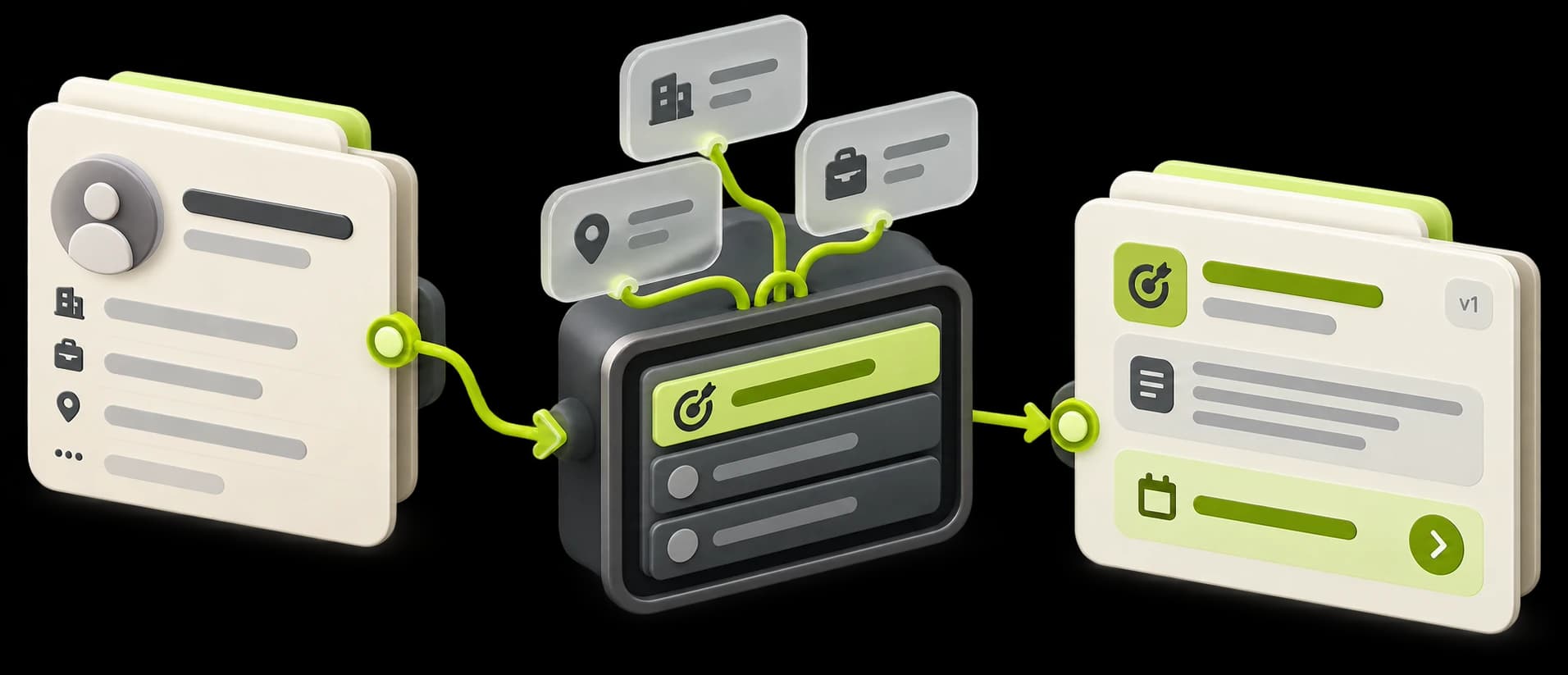
We implemented an AI-assisted prioritization layer directly within the company's existing CRM. The system evaluates available contact and company information, assigns an ideal customer profile fit category, calculates a configurable priority score and recommends a next step with a written explanation. All six AI-generated properties are written back to the contact record, where salespeople and managers can use them alongside their existing workflows. Instead of switching between separate sales intelligence tools, the team can assess and prioritize contacts inside the CRM they already use.
The company's CRM contained information about prospects, companies, engagement activity and sales progress. But having that information available didn't automatically establish which contacts deserved immediate attention. Sales representatives still had to interpret the records, compare opportunities and decide where to spend their time.
Activity-based scores didn't tell the full story. Traditional engagement signals, such as email opens or website visits, offered an indication of contact activity. They didn't necessarily establish whether someone matched the company's ideal customer profile. A senior decision-maker at a relevant business could be a strong potential customer without having recently opened an email. Meanwhile, a highly active contact might have little purchasing authority or fall outside the intended market. The team needed a broader evaluation of customer fit, not simply a ranking of recent clicks.
Lead prioritization depended too heavily on individual judgment. Without consistent scoring criteria, different salespeople could evaluate the same contact differently. Managers could identify priority accounts during pipeline reviews, but those decisions were difficult to apply consistently across a larger database. Reps still needed to determine which contacts to work first and what their next action should be. The business wanted a repeatable prioritization method informed by its own target-customer criteria.
A score without an explanation wasn't enough. Even when a contact received a high score, the sales representative needed to understand why. Was the recommendation based on seniority, company size, industry relevance or buying signals? Without that context, a numerical score could become another field that employees learned to ignore. Managers also needed a way to review the reasoning behind a recommendation rather than accepting an unexplained algorithmic ranking.
The solution needed to work inside the existing CRM. Adding another sales tool would create a separate workspace for representatives to monitor. That meant more switching between applications and a greater risk that useful recommendations would remain disconnected from daily sales activity. The business needed the prioritization results where contact records, tasks, sequences and sales reporting already existed. The objective wasn't to replace the CRM. It was to make the information inside it more useful for deciding what to do next.
02WHAT WE BUILT
An AI prioritization layer that turns existing CRM data into explainable sales recommendations.
We implemented a configurable scoring workflow that reads available contact information, evaluates customer fit and writes structured recommendations back into the CRM. The solution combines ideal customer profile assessment, weighted scoring, priority categories, AI-generated reasoning and integration with the existing contact-management environment.
Ideal customer profile assessment: We implemented an AI-assisted evaluation of how closely a contact matches the company's preferred customer profile. The assessment considers relevant information already available in the CRM, including job title, seniority, company characteristics, industry and geography. Where supported by the available record, other decision-maker and intent-related signals also contribute to the evaluation. Each contact receives one of four fit categories: Strong, Moderate, Weak or Not a fit. This provides a more useful distinction between an active contact and a contact who actually resembles the business's target customer.
Configurable lead scores and priority tiers: The scoring layer combines the selected criteria into a composite score on a 0–100 scale. The contribution of individual factors can be adjusted to match the business's own prioritization requirements. A separate priority tier is derived using thresholds configured for the revenue team. The system supports Hot, Warm, Cold and Nurture categories. This allows sales representatives to group contacts according to a consistent scoring method rather than relying on activity signals alone. The score represents a prioritization assessment, not a guaranteed prediction of revenue or conversion.
Recommended next steps with readable reasoning: Beyond assigning a score, the system generates a proposed next action for the contact. For a strong-fit prospect, that might mean prioritizing a discovery conversation. For a lower-priority contact, it could mean further nurturing or a later review. Each recommendation is accompanied by a short explanation of the factors that influenced the assessment. The reasoning helps representatives understand why a contact received a particular priority and gives managers more context when reviewing sales decisions. Employees retain responsibility for judging whether the recommended action is appropriate.
Six AI-generated properties inside the CRM: We integrated the scoring output directly into the existing CRM contact record. The implementation uses six structured properties: ICP Fit, Score, Tier, Next Step, Reasoning, and Version/Timestamp. The version and timestamp information helps users distinguish a recent assessment from an older one. Because the output is stored as native CRM data, it can be viewed, filtered and used alongside the information salespeople already rely on. Representatives do not need a separate dashboard simply to see an individual contact's AI-generated prioritization.
CRM workflow and management visibility: The scored properties are available to the CRM's existing filtering, reporting and automation mechanisms. Sales managers can create views of contacts by fit or priority and identify records that need attention. The implementation also provides workflow integration points for tier-based processes, such as assigning leads or enrolling eligible contacts into follow-up sequences. Whether specific automated routing and enrollment rules were activated in production remains to be confirmed. The central design principle is that AI-generated recommendations become usable CRM properties rather than remaining isolated inside a separate scoring application.
03HOW IT WORKS
From an existing CRM contact to an explained sales priority.
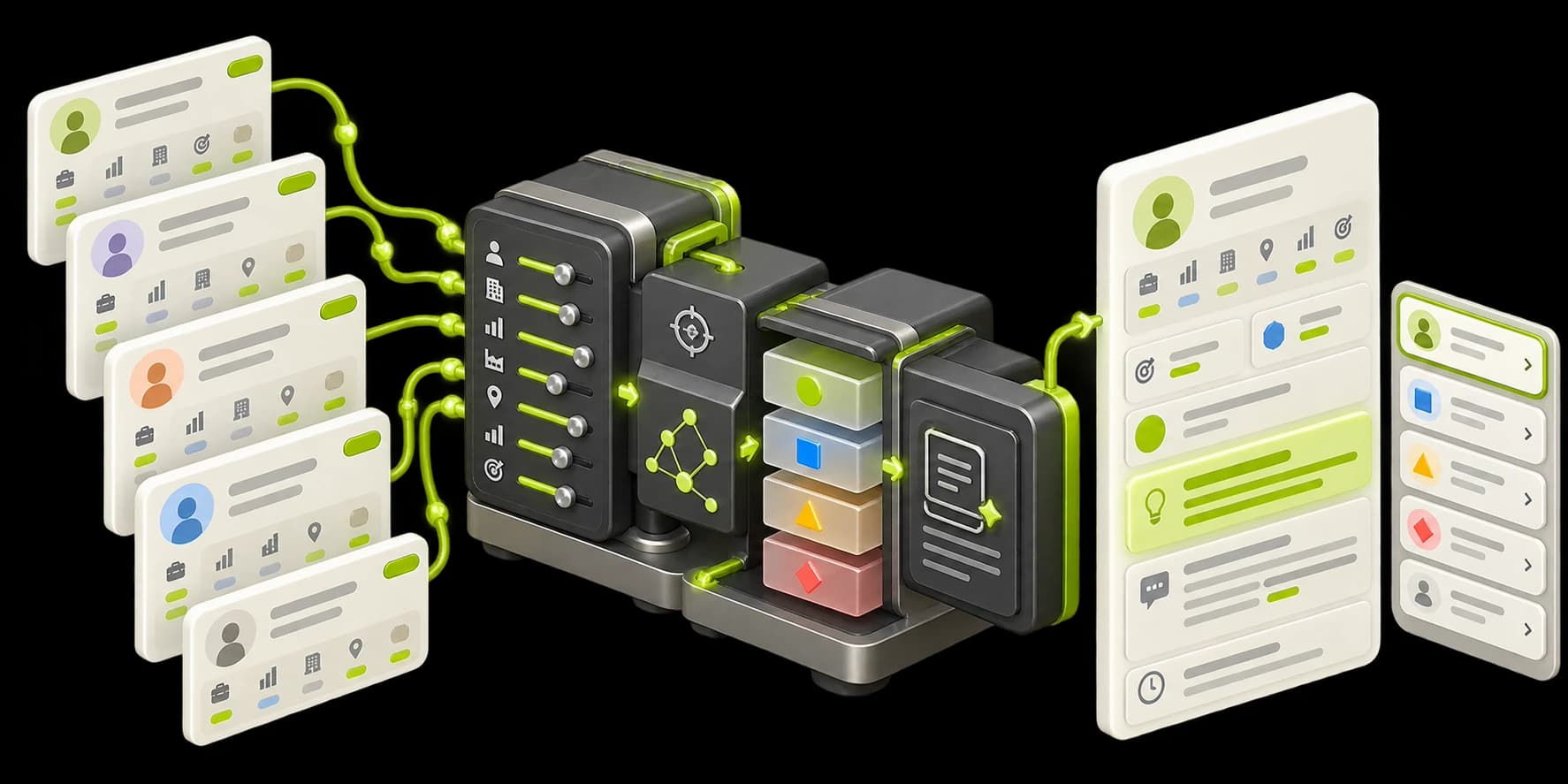
The implementation follows a five-stage scoring and CRM update process. The scoring output is saved to the contact record. Any additional automated sales actions depend on the organization's configured workflows.
- 01
Read available contact and company information
The scoring workflow retrieves the information associated with a supported CRM contact. Relevant inputs can include the person's role, seniority, company characteristics, industry, geographic relevance and available engagement or intent indicators. The evaluation uses the available data rather than assuming that every contact record contains a complete profile.
- 02
Assess fit against the ideal customer profile
The system evaluates how closely the contact matches the business's target-customer criteria. Relevant attributes contribute to the assessment, and the contact receives a Strong, Moderate, Weak or Not a fit classification. This creates a consistent customer-fit indicator beyond recent engagement activity.
- 03
Calculate the priority score and tier
The scoring engine applies the configured weighting rules to the available signals. It produces a composite score on a 0–100 scale. The result is then mapped to a Hot, Warm, Cold or Nurture tier using the revenue team's configured thresholds. These values are intended to support prioritization rather than guarantee a commercial outcome.
- 04
Generate a recommended action and explanation
The AI component prepares a suggested next step based on the assessment. It also generates a concise explanation of the factors behind the recommendation. The scoring run's version and timestamp are associated with the result so that users can identify when the assessment was produced.
- 05
Update the CRM record for sales use
The six structured output properties are written to the contact record inside the existing CRM. The salesperson can review the fit category, score, tier, recommendation and explanation in their normal working environment. Managers can use those fields in filtered views and reporting. Where tier-based workflows have been configured and activated, the properties can also support follow-up automation. The sales team remains responsible for the actual outreach strategy and contact decisions.
04THE IMPACT
Sales priorities become visible, explainable and usable inside the CRM.
The implementation adds a structured prioritization process to the company's existing contact database. The following outcomes describe established system capabilities. No independently verified increases in conversion, closed revenue or sales productivity have been supplied for publication.
Contact prioritization considers more than recent activity
The scoring approach incorporates ideal customer profile fit and other available contact signals. This helps the team distinguish contacts that resemble preferred customers from those whose main indicator is recent engagement.
Every scored contact has a clearer explanation
The AI Reasoning property provides context for the assigned priority. Representatives can inspect the factors behind a recommendation rather than relying solely on a numerical score.
Recommended actions appear where salespeople already work
The next-step recommendation is stored directly on the CRM contact record. This reduces the need to open a separate scoring interface to understand the system's recommendation.
Managers can review priorities through existing CRM views
Structured fit, score and tier properties make it possible to filter and group contacts using the CRM's established reporting tools. This gives managers a practical way to examine prioritization across the pipeline.
The scoring output can support existing sales workflows
Because the results are written as CRM properties, they can be used by supported automation mechanisms. Tier changes can provide inputs for configured assignment, task or follow-up workflows without requiring a separate sales application. The operational benefit is a more consistent basis for deciding which contacts deserve attention and why—within the system the sales team already uses.
05KEY TAKEAWAYS
Explained CRM prioritization helps sales teams decide what deserves attention first.
- 01
Lead activity and customer fit are different signals.
Email opens and website visits may indicate interest, but they don't necessarily establish whether someone is an appropriate buyer. A useful prioritization system should consider the business's ideal customer profile alongside available engagement information.
- 02
A score becomes more useful when employees understand the reasoning.
A numerical ranking can help organize work. An accompanying explanation gives salespeople and managers a clearer basis for reviewing the recommendation and deciding what action makes sense.
- 03
AI output should become part of the existing operating system.
Sales teams already manage contacts, follow-ups and reporting inside their CRM. Writing AI-generated assessments back into structured CRM properties makes the output easier to use in everyday operations.
- 04
Prioritization rules should reflect the business, not a generic scoring formula.
Different sales organizations value different combinations of company fit, seniority, buying signals and account characteristics. Configurable weights and priority thresholds allow the scoring approach to reflect how the business actually qualifies opportunities.
06NEXT STEP
Does your sales team know which CRM contacts deserve attention first?
If your representatives are working through large contact lists, relying on activity-based scores or manually deciding which leads to prioritize, there may be an opportunity to make your existing CRM more useful.
At 99xAutomation, we design and implement AI-assisted sales workflows that evaluate available customer data, organize priorities and connect recommendations with existing CRM processes.